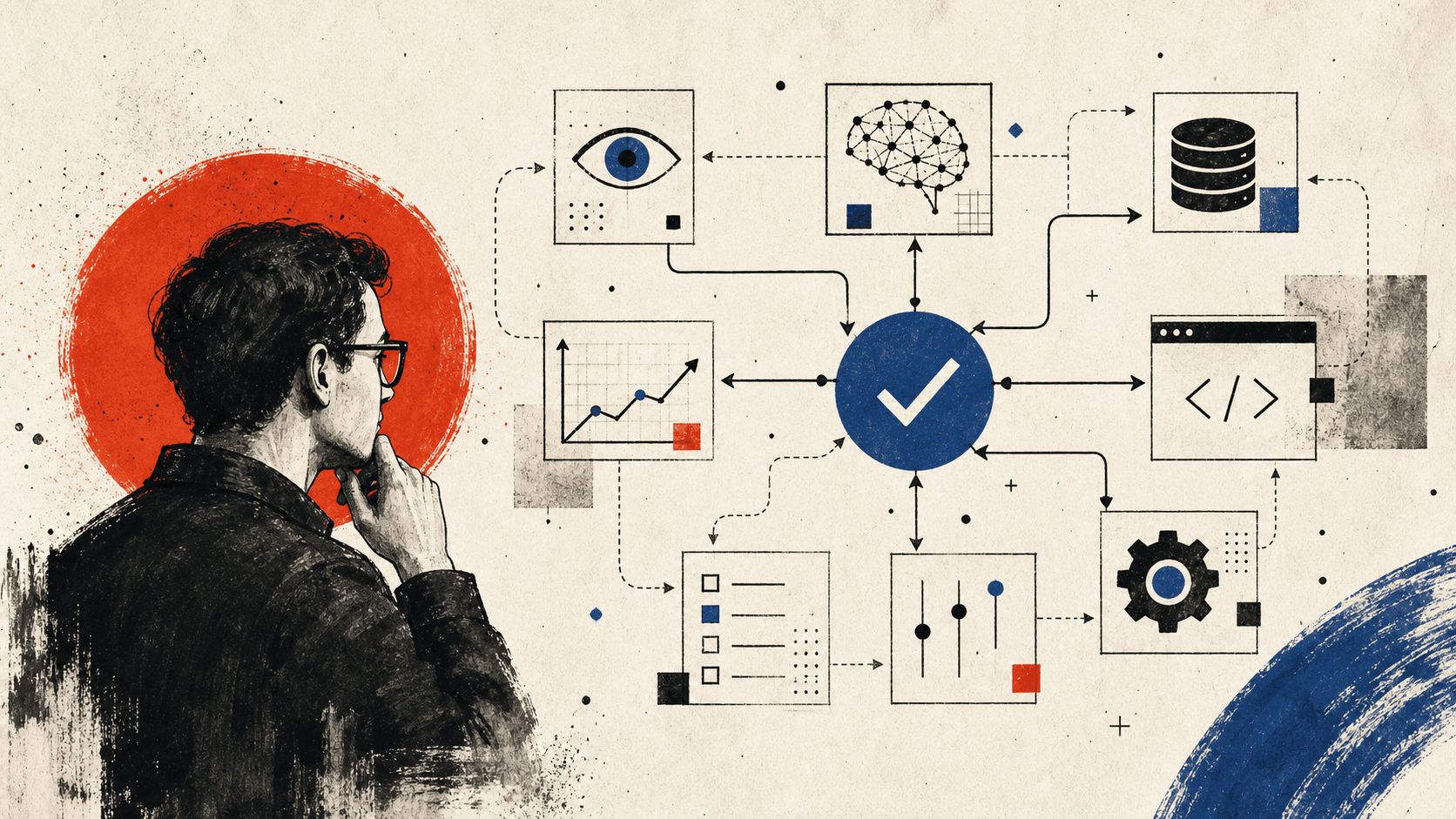
The conversation about AI agents is everywhere. Platforms, frameworks and libraries promise autonomy, execution and results. But in the middle of the excitement we have confused activity with intelligence, and tools with judgment.
An agent is not valuable for everything it can do, but for how it decides what to do, when to do it and why.
The mistake of confusing autonomy with activity
Many so-called "agent" systems are nothing more than sophisticated workflows that chain models with tools. They react to everything, call APIs, generate responses and move data. Yes, they do things. But without clear judgment they also generate noise, cost and risk.
Autonomy without judgment is improvisation. And improvisation scales poorly.
A useful agent is not the one that executes the most actions. It is the one that knows when not to act.
The point is not to remove capability from the system. It is to give it a verifiable definition of what it means to act well.
Three questions before building an agent
- What is the central decision? Define precisely the decision the agent should support or make. If you cannot explain it in a sentence, it is not ready yet.
- What signals will it use to decide? Data, events, system state, user context. The better the signal, the better the judgment.
- What are the limits and the cost of being wrong? Every agent must operate within clear, measurable and reversible limits.
If you cannot answer these three questions, do not build an agent yet. Build the judgment first.
What does designing with judgment imply?
Designing with judgment means defining the desired behavior before the possible behavior. It means aligning objective, context, policies and evaluation.
In practice, an agent with judgment combines five capabilities:
| Stage | Question |
|---|---|
| Perceive | What is actually happening? |
| Reason | What interpretation best explains the signals? |
| Decide | Which action improves the goal without breaking limits? |
| Act | How is it executed safely and observably? |
| Learn | What result should change the next decision? |
Most prototypes invert the order: start by acting and then try to justify the decision. In production it pays to do the opposite.
An example: technical support triage
A triage agent receives tickets, identifies intent, estimates impact, groups similar cases, suggests actions and decides whether it can resolve, needs more information or should escalate.
It does not answer everything. It does not automate every step just because it can. It decides well and leaves enough traceability for a person to understand why.
That detail transforms a flashy demo into a reliable system.
Judgment before automation
Agentic AI will be transformative, but not by doing more. It will be transformative by allowing systems and people to make better decisions consistently.
Before adding tools, add judgment. That is what turns technology into trust and results.